Estimation of wheat planting date using machine learning algorithms based on available climate data
Abstract
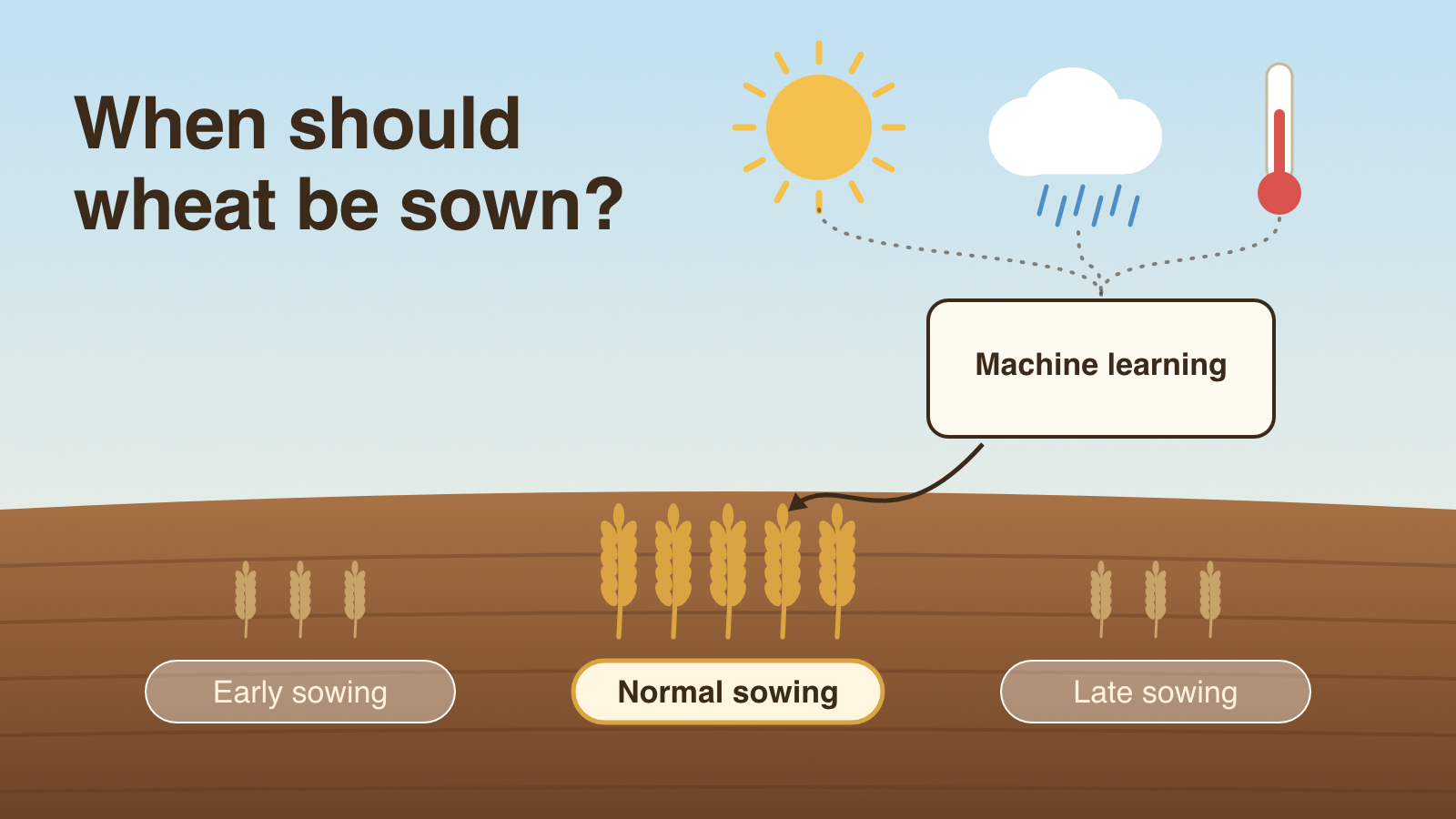
Agricultural applications supported with information technologies increase plant production, protect soil and reduce labor, which is crucial for sustainable agriculture. Impacts of planting dates on production are very well known. In the current study machine learning algorithms have been used in determining planting date. The proposed method aims to help farmers to obtain higher yield providing them with accurate planting date. For this purpose, metereological data was used as an input. For each year, metereological information (Daily Maximum Air Temperature, Daily Relative Humudity, Daily Average Air Temperature, Daily Minimum Air Temperature and Daily Precipitation) in the first 300 days were used to determine three different planting dates; early, normal and late for wheat crop. For estimation of planting date, classification algorithms of k Nearest Neighbor (kNN), Support Vector Machine (SVM) and Decisions Trees were used. Performances of different algorithms were calculated with leave one out cross validation approach. In order to eleminate extremely high processing time because of high dimension of the data set and improve estimation performance, genetic algorithm was used to reduce the number of features. For the estimations performed using both all features and also the features selected with genetic algorithm the highest accuracies were obtained using kNN method with classification accuracy rates of 37% and 92%, respectively. Overall, the results showed that wheat planting date could be determined successfully from climate information obtained in the first 300 days with the help of machine learning techniques combined with feature selection using genetic algorithm, which will prevent low productivity, financial and labor loss as a result of inaccurate planting date.

Abdulkadir Gumuscu
Associate Professor of Artificial Intelligence
My research focuses on machine learning, computer vision and optimization for health, agriculture and energy.