Deep learning-based fully automatic system for segmentation and defect classification of the solar modules using electroluminescence images
Abstract
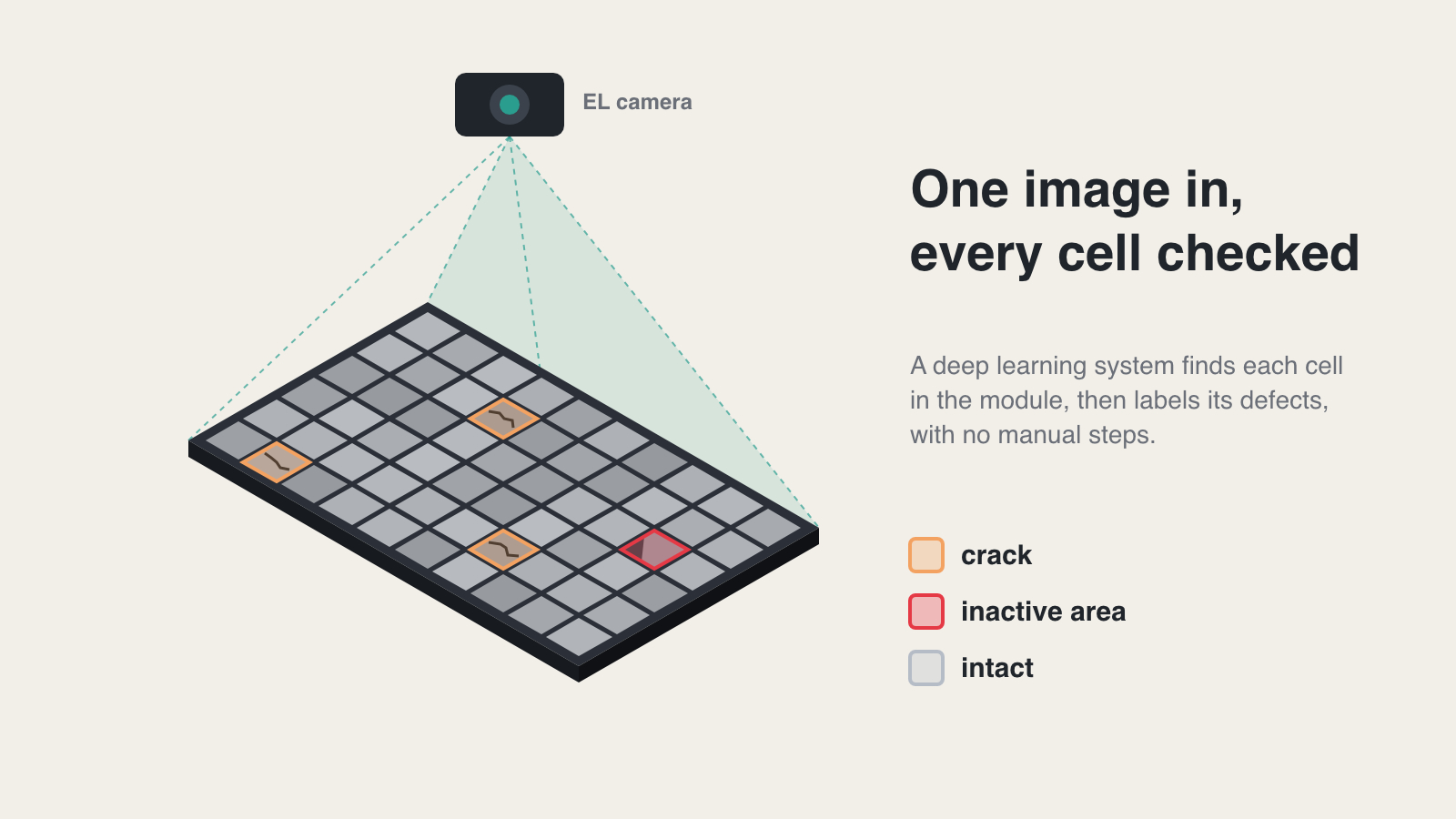
In order to ensure high efficiency operation of solar power plants, monitoring and maintenance of their components are of great importance. As PhotoVoltaic (PV) modules are the key components of the solar powered electricity production systems, determination of the module cell defects would prevent future malfunctions and power losses. Using ElectroLuminescence (EL) imaging, even the finest defects like micro-cracks could be detected precisely. Manual evaluation of the EL images is time-consuming, labor-intensive and prone to human errors while emerging automatic systems often focus on a single aspect of the problem. To address these issues, a complete fast and robust evaluation framework was proposed. In this work, we propose SolarELTester, a novel end-to-end fully automatic segmentation and classification system for segmentation and identification of the solar cell defects using the integration of state-of-the-art deep learning algorithms on module EL images. Proposed system composed of four stages: image preprocessing, segmentation using Region-based Convolutional Neural Networks (R-CNN), defect classification using modified lightweight CNN and Vision Transformer (ViT) models and finally defect ratio calculation. Proposed system was able to detect solar cells even from distorted module images at 99.73 % mean Average Precision (mAP) and classify five types of common solar cell defect types with 98.71 % accuracy for the validation dataset while maintaining real-time performance. Therefore, the proposed methodology represents a significant stride towards automation of the solar module analysis and offers a flexible framework for monitoring and quality assessment in solar-powered systems.

Abdulkadir Gumuscu
Associate Professor of Artificial Intelligence
My research focuses on machine learning, computer vision and optimization for health, agriculture and energy.